

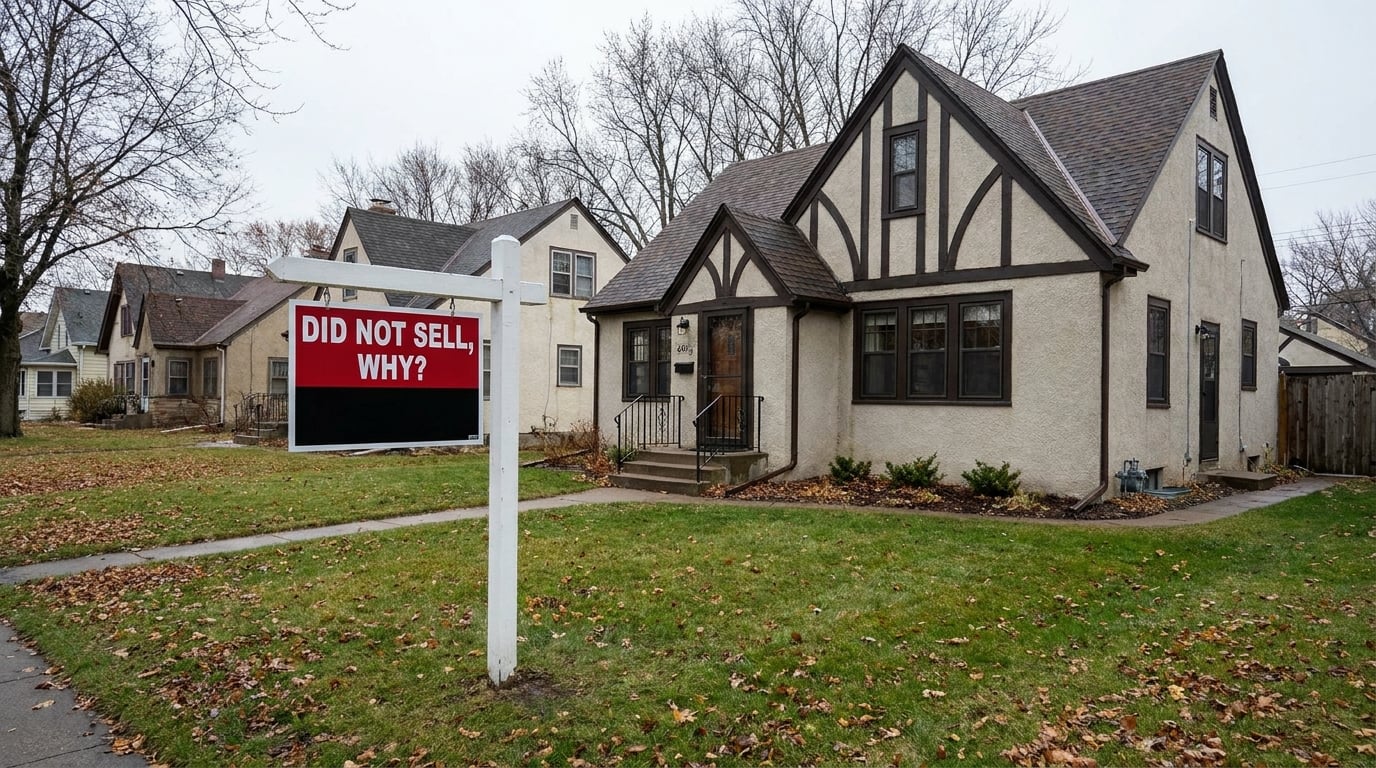
If your listing expired and your house did not sell, I get it. That is a frustrating place to be. You prepared, you showed the home, and somewhere along the way, it just did not come together.
Here is what I tell sellers who call me in that situation: the first listing was not wasted time. It was information. The question is whether you read it carefully before going back to market.
Relisting with the same price, the same photos, and the same plan is not a reset. Buyers can see the history. The ones who passed the first time are still out there, and they will notice. So before you put the sign back in the yard, let's work through five honest questions that actually matter.
Note: Market data referenced here reflects October 2026 Twin Cities trends shared by the author and was current at time of publication.
Key Takeaways
- Low online views usually point to a price or presentation problem. Tours without offers tend to signal a condition or value gap. Each pattern tells a different story.
- Your online listing does most of the work before a buyer ever walks in. Dark photos, a weak lead image, or a vague description can quietly kill your showing activity.
- Price is rarely the only issue, but it is almost never completely off the table either. Condition, layout, and location all shape what buyers are willing to pay.
- Tour access and timing affect results more than most sellers expect. A home that is hard to show is a home that sits.
- Changing agents only helps if something about the plan actually changes. A new name on the sign is not a strategy.
- Saint Paul sellers should check whether their Truth-in-Sale of Housing (TISH) report is still valid before relisting. Reports cover one sale and expire after 365 days.
- Review your expired listing agreement before signing anything new. Minnesota law includes protective-list provisions that can affect your next steps.
What Did Your First Listing Actually Tell You?
Before changing anything, look at what actually happened during the first listing. The number of online views you got, how many people came through, what the feedback said, and what happened with any offers, all of it is telling you something. Most sellers want to move past it. I understand that. But skipping this step usually means repeating the same problem.
Here is a simple way to read the patterns:
| Buyer Response | What It May Suggest | What to Look At |
|---|---|---|
| High views, few tours | Photos or price not landing | Photo quality, price bracket |
| Tours, no offers | Condition or value gap | Buyer feedback, competing sales |
| Offers that fell apart | Inspection or appraisal issues | Disclosures, pricing |
| Very few views at all | Presentation or pricing problem | Description, photos, online exposure |
Website Interest
Pull up the listing stats and compare your view and save counts against similar homes listed at the same time. Start with the places buyers were most likely to see the property, such as Zillow, Realtor.com, Homes.com, and your agent's MLS-facing listing reports if those are available. If comparable homes were getting twice the traffic, that is worth understanding, not explaining away.
Tour Activity
Look at first visits separately from second looks and canceled showings. A home that gets plenty of tours but no second visits is a different problem than one people never came to see at all. Both matter, but they point in different directions.
Offer Outcomes
If you received offers that fell apart, the reason matters. A buyer who backed out after inspection is a different conversation than a financing issue or a negotiation that broke down over price. Each one points to a different fix before you go back to market.
Did Your Online Listing Earn a Tour?
Most buyers are scrolling through listings on their phones, usually at night, often quickly. Your listing has a few seconds to make them stop. If the first photo is the front of the house on a gray winter afternoon, the description reads like a data sheet, or the images are dark and hard to read on a small screen, most buyers will keep going.
Pull up your old listing on your phone right now. Put it next to two or three competing homes at a similar price. Be honest about what you see.
Lead Photo and Photo Order
The first photo sets the tone for everything after it. It does not always have to be the exterior. A bright living room or a well-lit kitchen can earn more attention. The first five photos, taken together, are what decide whether a buyer schedules a tour or keeps scrolling.
Home Description and Property Facts
A good description tells buyers what they cannot see in photos. When were the mechanicals last replaced? Is the garage heated? How does the layout actually flow day to day? What is the backyard like in the summer? Vague words like "charming" or "move-in ready" do not answer those questions. Specifics do.
Condition and Buyer Expectations
In older Saint Paul neighborhoods, this comes up a lot. Buyers are comparing your home against everything else in that price range, and they are thinking about what they will spend after closing. Some issues are worth addressing before relisting. Others are better handled through pricing. The important thing is knowing which is which, so you are not spending a Saturday on something buyers would not have noticed anyway.
Did Your Price Match the Home Buyers Saw?
Price is almost always part of the conversation after an expiration. That does not mean the number was dramatically wrong. Sometimes it was off by five percent. Sometimes the market shifted during the listing period and the price did not. Sometimes the home was priced for a condition it did not quite show.
The more useful question is: what are buyers choosing instead of your home, and why?
Recent Sales and Active Competition
The Twin Cities market slowed heading into winter in October 2026. Pending sales were down 16.7% from a year earlier, while buyers had 10.9% more homes to choose from. Homes that sold averaged 51 days on market, up from 48 a year earlier.
That combination matters. Fewer homes going under contract, more competition among sellers, and slightly longer market times all make it easier for a listing to sit if the price is even a little off. Your price needs to reflect what buyers can choose from right now, in the same neighborhood and at a similar condition level, not what sold months ago or what an online estimate suggested.
Condition and Location Adjustments
This is where Saint Paul gets more nuanced than many sellers expect. Markets can change from block to block, and sometimes even within very small micro-locations. A house a few streets away may share the same zip code, but not the same buyer pool, street feel, walkability, school draw, traffic pattern, or overall appeal.
Two homes on the same block in Como Park, Macalester-Groveland, or Saint Anthony Park can have meaningfully different values based on layout, parking, mechanicals, and how they show. A home with original windows and an unfinished basement is not the same as one that has been updated in ways buyers actually care about. The comparison has to be honest about those differences, even when it is uncomfortable.
This is also why price per square foot does not tell the whole story. It can be a helpful reference point, but it does not account for block-by-block differences, functional layout, parking, updates, street appeal, or the drawbacks buyers notice right away.
It is also worth being direct about this: sometimes the issue really is location or layout. A busy street, backing to commercial property, limited parking, a choppy floor plan, steep stairs, or a small primary bedroom can absolutely affect demand. Those are real buyer objections, and pretending otherwise usually wastes time.
That is also where it helps to separate what you can control from what you cannot. You can adjust price, improve condition, offer concessions, or time the relist more carefully. You cannot physically change the location, the lot, the traffic pattern, or an awkward layout. If buyers are reacting to something fixed, the smartest move is usually to respond through price, timing, or terms rather than fight the market.
That is why broad averages only get you so far. In Saint Paul especially, pricing well means understanding the micro-market around your home, not just the larger neighborhood name on the map.
Search Brackets and Price Changes
Buyers search in price brackets. A home listed at $405,000 may never appear in front of buyers filtering up to $400,000. A small adjustment can change who sees the listing at all. Price reductions during a listing also carry a signal, so it is worth thinking about where to start rather than where to end up after a few cuts.
Did Your Timing and Tour Plan Help the Sale?

A home can be priced well, presented well, and still sit if buyers cannot get in easily. This is one of the quieter reasons listings struggle, and it is worth looking at honestly.
Market Season and Launch Date
The first week of a listing is usually the strongest. Buyers who have been watching the market are ready to move, and if the home is not at its best on day one, or launches during a holiday weekend with heavy competing inventory, that window closes fast and does not really reopen.
Tour Access and Notice
Requiring 24-hour notice, limiting showing windows, or making access difficult with pets or tenants reduces the number of buyers who actually walk through. Some of those buyers would have made an offer. Removing that friction before relisting is one of the lower-cost things you can do.
Seller Response and Decision Speed
When feedback comes in after showings, how quickly did you respond to it? When an offer arrived, how fast did you move? I have seen situations where a seller's hesitation on a reasonable offer led to the buyer walking. It is worth agreeing with your agent ahead of time on response timelines so that decision pressure does not catch anyone off guard.
What Will Your Next Agent Do Differently?
A new agent can help. It can also just shift the problem sideways if nothing about the approach actually changes. The question worth asking is not whether you want someone new, but what this agent is going to do differently, and whether they can show you exactly how.
Local Buyer and Agent Reach
This is not really about how big the brokerage is. It is more about the relationships and reputation the agent has with other agents who are actually active in Saint Paul and Roseville. When an agent is known for pricing honestly, communicating clearly, and holding a deal together, other agents tend to pay attention. That can lead to better early conversations, stronger showings, and more confidence from the people bringing buyers through the door.
Feedback and Follow-Up Plan
A good agent does not wait until after the showing to start communicating. Some of the best ones are already reaching out beforehand, making sure buyer agents know what matters about the home, what updates have been made, and what kind of opportunity they are walking into. That kind of pre-emptive communication can shape how the home is understood before anyone even steps through the door.
After each showing, what happens? A good agent tracks patterns, follows up with interested buyers, and brings a recommendation when the same concern shows up three times in a row. If that did not happen during the first listing, ask about it directly before signing anything new.
Seller-Agent Communication Standards
Talk through expectations before the listing starts. How often will you hear from your agent? What does the weekly update look like? When does a pricing conversation happen if the market is not responding? These are easier conversations to have upfront than four weeks into a listing that is going quiet.
Relisting is a real opportunity to get it right. The sellers I see succeed after an expiration are almost always the ones who took an honest look at what the first listing told them, made a few focused changes, and went back to market with a clearer plan. That is usually all it takes.
If your listing expired and you want a straightforward second opinion, I am happy to take a look. We can walk through the pricing, the presentation, the buyer feedback, and what I would actually change before you relist.
Simple plan. No pressure.
Frequently Asked Questions
How Long Should I Wait Before I Relist My House?
There is no magic waiting period. The right time to relist is when the specific issue that prevented the sale has actually been addressed, whether that is pricing, presentation, or access.
Can Buyers See My Old Price and Listing History?
Yes. Cumulative days on market carry over in NorthstarMLS even after a listing expires and relists, so buyers and their agents can see the full history. A fresh start date does not erase the record.
Do I Need a New TISH Report to Relist in Saint Paul?
Saint Paul's TISH report is valid for 365 days but covers only one sale. If your report from the first listing is still within that window, it may be reusable, but confirm the date and check whether anything has changed. Roseville has no equivalent requirement.
Can I Hire a New Agent as Soon as My Minnesota Listing Expires?
Generally, yes, but Minnesota law allows brokerages to include a protective list of buyers introduced to the property during the listing period. Review your expired agreement carefully before signing with someone new so you understand whether any commission obligations carry over.
Do Older Homes in Saint Paul Need More Prep Before Relisting?
Often, yes, but not always in the way sellers expect. In Saint Paul, buyers tend to look closely at windows, electrical, basements, foundations, and how the home has been maintained over time. The goal is not to over-renovate. It is to decide which issues are worth fixing before you relist and which ones are better handled through pricing.
Are Roseville Buyers More Sensitive to Layout and Condition?
In many cases, yes. Roseville buyers often compare a wide mix of housing styles and ages, so layout, natural light, level of updating, and overall ease of living can carry a lot of weight. A home that feels functional and well cared for will usually compete better than one with the same square footage but more awkward tradeoffs.
Does Timing Matter Differently in Shoreview?
It can. In Shoreview, family schedules, school-year timing, and move-up buyer demand can all shape how quickly a home gets attention. That does not mean you can only sell in one season, but launch timing, prep quality, and early pricing can matter a lot when buyers have options and are trying to line up a move around work and school.
Check out this article next